


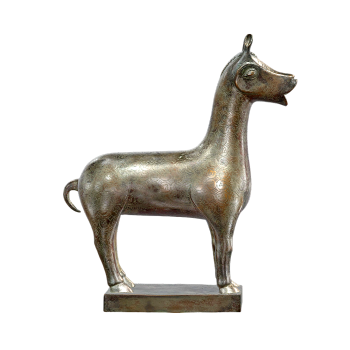
Doe Sculpture (Doha Museum of Islamic Art)
This is Doha Doe, a famous bronze fountain head sculpture of Islamic art. Made in the Spanish Umayyad Caliphate (Umayyad al-Andalus) in the middle of the 10th century, it was originally the outlet of a fountain, which was placed beside the pool or fountain in the palace courtyard, and water would spray out through the pipe at the base. The sculpture is made of copper alloy (gunmetal), with fine engraving patterns on the surface. The pattern is a half palm leaf pattern in a circle, giving the impression of being covered by gorgeous fabric. The original is now in the collection of the Museum of Islamic Art in Doha, Qatar.

A Kashan pottery kettle in the shape of a ram
The "Ram shaped Kashan pottery kettle" is a 13th century Iranian artwork currently housed in the Minneapolis Museum of Art in the United States. This artwork is a water kettle shaped like a ram. This work is part of the Kashan pottery, using transparent turquoise colored glaze and black underglaze painted decoration. Although there are relatively few circular ceramic sculptures in Islamic art, decorative patterns were popular on metal and ceramic vessels in Iran and Türkiye during the Seljuk rule. The shape of a bull is the most common, but there are also vessels in the shape of camels, rams, and lions.
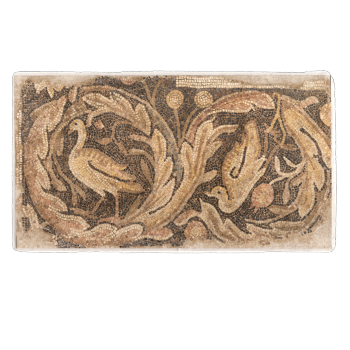
The Bird in the Leaves
The Bird in the Leaf is a mosaic art from Türkiye, which is currently collected in the Minneapolis Museum of Art. The theme of this work is birds and plants, showcasing the Islamic art style of the 4th and 5th centuries.

A Kashan pottery kettle in the shape of a ram
The "Ram shaped Kashan pottery kettle" is a 13th century Iranian artwork currently housed in the Minneapolis Museum of Art in the United States. This artwork is a water kettle shaped like a ram. This work is part of the Kashan pottery, using transparent turquoise colored glaze and black underglaze painted decoration. Although there are relatively few circular ceramic sculptures in Islamic art, decorative patterns were popular on metal and ceramic vessels in Iran and Türkiye during the Seljuk rule. The shape of a bull is the most common, but there are also vessels in the shape of camels, rams, and lions.

Popular Models
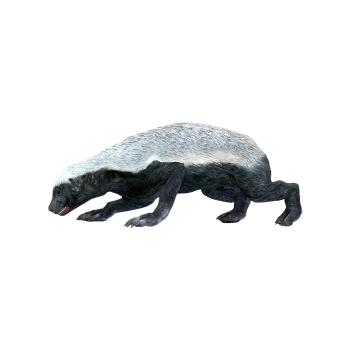
Honey Badger (3D animated model)
192 View
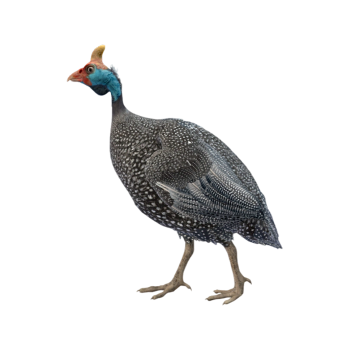
Guinea fowl (3D animated model)
163 View
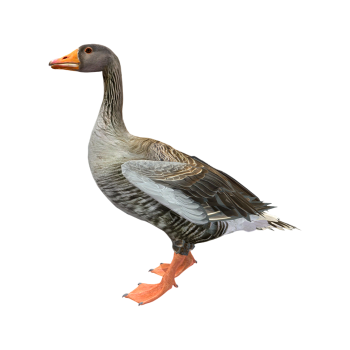
Wild Goose (3D animated model)
185 View
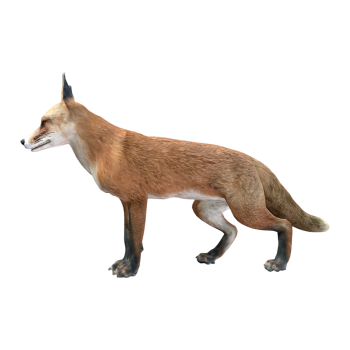
Red Fox (3D animated model)
153 View
Random Model


pencil sea urchin
579 View
Garlic
688 View

Tanks
1325 View

RAVEN Torex Longboard Skateboard
368 View
Study
587 View
large truck
1149 View

